- Home
- Countertops
- Products
- Gallery
- Customer Testimonials
- Design Simulator
- Resources
- Contact


A kitchen countertop does more than provide a place to prepare meals. It connects the cabinets, backsplash, sink, range, island, and other work areas throughout the room.
The right countertop design can make a kitchen feel more custom, functional, and visually coordinated. Details such as a full-height slab backsplash, bold island surface, mitered edge, or textured finish can influence the entire remodel.
Creating a custom appearance does not always require choosing the most expensive material or adding several decorative features. One or two carefully planned details can make a noticeable difference without overwhelming the kitchen.
Countertops are among the most visible and frequently used surfaces in a kitchen. They influence color, texture, durability, workflow, and the relationship between cabinets, appliances, flooring, and lighting.
Homeowners often begin by comparing quartz, granite, quartzite, marble, and porcelain slabs. Material is important, but the layout, finish, edge profile, backsplash, seams, and overhangs also affect the final result.
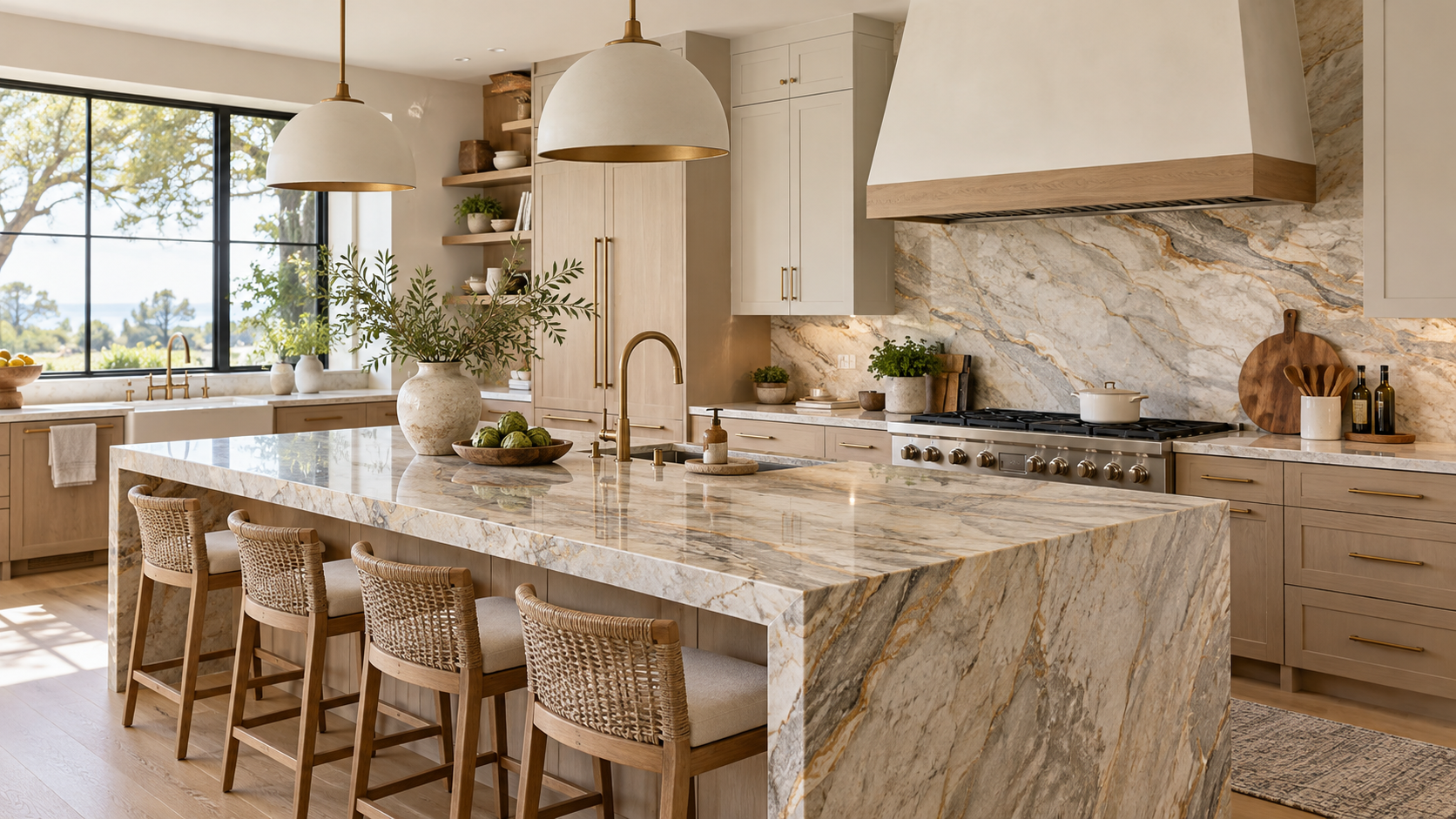
For example, subtle quartz perimeter countertops can create a quiet background for a dramatic quartzite island. A slab backsplash can define the range wall, while a mitered edge can make an island appear thicker.
Countertop choices should also support daily use. Consider how often the kitchen is used, how it is cleaned, which areas receive the most activity, and how much maintenance is realistic.
A full-height slab backsplash is a large slab surface that extends from the countertop up the wall. It may stop beneath the upper cabinets, reach the range hood, or continue to the ceiling.
Because it has fewer grout lines than tile, a slab backsplash can create a cleaner and more continuous appearance. It may match the countertops or use a coordinating material to define a feature wall.
Marble-look quartz provides controlled veining, while quartzite and granite offer natural movement. Porcelain slabs are available in large-format patterns. Marble may also be considered when the homeowner understands its care requirements.
Bookmatched veining is created when two slabs are positioned so their patterns mirror each other. It is often used behind a range or across another prominent wall.
Bookmatching requires careful slab selection, layout, and fabrication. Before choosing this detail, review cabinet placement, outlet locations, seams, range hood dimensions, and pattern direction.
Quartzite, granite, marble, porcelain slabs, and selected quartz patterns can serve as focal points when they feature noticeable movement or veining.
Dramatic material does not need to cover every countertop. It can be reserved for the kitchen island, range wall, coffee bar, pantry, or serving area.
Using it selectively helps the pattern stand out while keeping the room balanced. It may also allow homeowners to concentrate more of the material budget on one prominent area.
View the full slab whenever possible. A small sample may not show the complete pattern, color variation, or mineral deposits. Seam placement and veining direction should also be reviewed before fabrication.
Natural stone materials such as granite, quartzite, and marble may require proper sealing and care.
The island countertop does not have to match the perimter countertops.
A subtle surface around the walls and a more expressive island material can create a focal point without making the kitchen feel busy. Soft quartz perimeter countertops, for example, may be paired with a high-movement quartzite or darker granite island.
Contrast should feel intentional. Look for shared undertones, colors, or veining that connect the island to the cabinets, flooring, backsplash, hardware, or perimeter surfaces.
Matching countertops create a quieter and more continuous appearance. Contrasting materials give the island more definition. The right approach depends on the kitchen size, lighting, cabinet colors, and overall style.
Kitchen work zones are areas organized around activities such as cooking, cleaning, food preparation, serving, or making coffee.
Different zones may benefit from different materials. A high-use sink or prep area may need a surface suited to frequent cleaning, while a coffee bar, pantry, desk, or serving area may allow for a more decorative option.
Possible combinations include quartz around the sink and range, with quartzite on the island; granite in the main kitchen with a coordinating pantry surface; or marble-look quartz with a darker coffee bar countertop.
Mixed materials work best when there is a clear reason for each choice. Repeating undertones, cabinet colors, hardware finishes, or backsplash details can keep the kitchen from feeling disconnected.
A mitered countertop edge joins pieces of material at an angle to create the appearance of a thicker slab.
This detail is often used on kitchen islands, waterfall panels, serving areas, and modern countertop designs. Quartz, porcelain, quartzite, and granite may be suitable, depending on the material and fabrication plan.
Mitered edges require precise fabrication. They can affect slab layout, material needs, cabinet dimensions, cost, and installation.
Discuss this option early in the design process. Waiting until after the slab is cut may limit what can be done.
Countertop finish affects appearance, texture, cleaning, and how daily wear is seen.
A polished surface is smooth and reflective. A honed finish is smooth with a lower sheen. A leathered finish has more texture, while a matte finish has a non-glossy appearance.
Leathered granite can highlight natural mineral detail. Honed quartzite or marble may create a softer appearance. Some quartz and porcelain products are also available in matte finishes.
Each finish behaves differently. Dark polished surfaces may show fingerprints, textured finishes may require more attention during cleaning, and honed marble may develop a patina.
View and touch samples before deciding. Natural stone may still require sealing regardless of the finish.
A slab backsplash does not need to cover the entire kitchen.
Using it in one feature area can create visual impact while reducing material use and fabrication complexity. Common locations include behind the range, sink, cooktop, open shelves, or main prep area.
A slab behind the range may match the countertops or introduce a more decorative material. A stone frame around the cooktop can also define the area without covering the full wall.
Before fabrication, review wall dimensions, outlets, range hood placement, shelf supports, upper cabinets, and required openings.
Smaller stone details can make a kitchen feel more carefully planned.
A stone windowsill above the sink can coordinate with the countertop and create a durable transition around the window. A narrow stone shelf above the backsplash can provide practical or decorative storage.
Carrying the countertop material into a pantry, coffee bar, desk, or serving area can also connect separate kitchen zones. The material may match exactly or coordinate through similar colors and undertones.
These details should be planned before installation. Measurements, shelf supports, outlets, seams, and transitions all matter.
Kitchen island countertop ideas should address seating, preparation, storage, serving, charging, and traffic flow.
A raised ledge can separate food preparation from seating, although it also divides the usable work surface. A curved overhang can soften corners and improve movement around the island.
A waterfall edge continues the countertop material vertically down one or both sides. A one-sided waterfall can define the island while leaving the opposite side available for seating, storage, or shelves.
Charging stations and outlets may be integrated into a side panel, drawer, or cabinet. Electrical features should be coordinated with the remodeling team and installed according to applicable requirements.
Overhang support, seating comfort, seams, veining, cabinet dimensions, and traffic clearances should be reviewed before fabrication.
Contrast does not have to be dramatic. Warm white quartz can complement cream cabinets, while white oak may pair with leathered granite, quartzite, or a soft marble-look surface.
The countertop edge profile also contributes to the design. A simple straight edge can keep patterned material from looking too busy, while a thicker mitered edge can make a subtle surface feel more substantial.
Countertop colors may look different under showroom lighting, natural light, and kitchen fixtures. Compare samples with cabinets, flooring, backsplash materials, hardware, and paint whenever possible.
Viewing samples at different times of day can help reveal undertones that are less noticeable in a showroom.
The best countertop design is not necessarily the one with the most features. It should support the kitchen’s layout, appearance, budget, and daily use.
Specialty details such as bookmatching, mitered edges, waterfall panels, shelves, and slab backsplashes may require additional material and fabrication. Decide which features matter most and concentrate the budget in those areas.
Also consider maintenance. Quartz, granite, quartzite, marble, porcelain, and other surfaces have different care requirements. Natural stone may require sealing, and marble can develop etching or patina.
The kitchen layout affects what will work. A large island may have room for a dramatic slab or thick edge, while a smaller kitchen may benefit from a more continuous surface.
Natural stone also varies from slab to slab. Review veining, background color, movement, seams, and pattern placement before fabrication.
Finally, consider the entire room. Countertops should coordinate with cabinets, flooring, backsplash, lighting, hardware, and wall color.
A full-height slab backsplash, dramatic island slab, or thick mitered edge can create a noticeable visual difference. The best choice depends the layout, material, budget, and overall design.
A full-height slab backsplash may be worth considering for homeowners who want fewer grout lines and a continuous surface. It can work well behind a range, sink, or feature wall, but it may require more material and planning than tile.
The island countertop can match the perimeter, but it does not have to. Matching surfaces create continuity, while a contrasting island can establish a focal point.
Quartzite, granite, porcelain slabs, and some quartz designs may work well for a dramatic island. Natural stone provides unique variation, while quartz and porcelain can offer more controlled patterning.
Quartzite can be a strong natural stone option for kitchen countertops, particularly for homeowners who want natural veining and variation. The specific stone should be evaluated for suitability, sealing, care, and expected use.
Quartz countertops are engineered surfaces made using mineral content, resins, and pigments. Quartzite is a natural stone quarried from the earth. Quartz typically offers more controlled patterning, while quartzite provides natural variation. Care and performance depend on the specific product or slab.
A honed finish is smooth and low-sheen. A leathered finish has more texture and tactile variation. Both can create a softer appearance than polished stone, but cleaning and maintenance expectations vary by material.
A mitered edge joins pieces of material at an angle to create the appearance of a thicker countertop. It is commonly used on islands, waterfall panels, and modern countertop designs.
Bookmatched veining occurs when two slabs are positioned so their patterns mirror each other. It is often used on feature walls, range backsplashes, islands, and other areas where the slab pattern is intended to be a design feature.
A waterfall edge continues the countertop material vertically down the side of an island or cabinet. It can be used on one or both ends, depending on the layout and design.
Granite, quartzite, marble, and other natural stones may require sealing and appropriate cleaning. Maintenance depends on the type of stone, finish, household use, and the homeowner’s expectations.
Select one or two standout details rather than using several competing features. A bold island with a quiet perimeter, a slab backsplash behind the range, or an integrated stone window sill can create a custom look while keeping the room balanced.
Custom kitchen countertops are not defined by material price alone. Layout, finish, edge profile, backsplash design, seams, and fabrication details all contribute to the final result.
Before finalizing specialty features, speak with a countertop professional about material suitability, slab dimensions, edge construction, seams, support, fabrication, and installation.
Careful planning can help create a countertop design that feels coordinated, practical, and personal. Contact Lexmar USA today to learn more about our custom kitchen countertops.

Lexmar USA refers its customers to the following quality lender for their financing.
Click here for more details and enter Promo Code: 0038-3729