- Home
- Countertops
- Products
- Gallery
- Customer Testimonials
- Design Simulator
- Resources
- Contact


Many Pittsburgh homes built or remodeled in the 1980s and 1990s are still part of the region’s most desirable neighborhoods. In places like Mt. Lebanon, Upper St. Clair, Sewickley, Fox Chapel, and the North and South Hills, these homes have seen several waves of kitchen design come and go. Laminate counters, tile surfaces, early granite installs, painted cabinets, open-concept updates, and newer quartz options have all had their place.
Yet one countertop material keeps returning to the conversation: granite.
For some homeowners, granite brings back memories of the heavily speckled countertops that became common in upscale kitchens decades ago. For others, it represents durability, natural beauty, and a surface that works just as well in a traditional Colonial as in a clean, modern kitchen. That is the real story. Natural granite countertops are not just a trend from the past. They have been part of high-end home design for decades, and today’s slabs offer more movement, depth, and design flexibility than many homeowners realize.
Before installing granite countertops became common in residential kitchens, natural stone was usually reserved for higher-end applications, and marble was often the stone people associated with luxury interiors. Granite’s rise in American homes accelerated in the 1980s and 1990s as natural stone countertop fabrication technology improved, quarrying became more efficient, and homeowners began investing more heavily in kitchens as central living spaces.
By the 1990s and early 2000s, granite had become strongly associated with upgraded kitchens, especially in affluent homes and major remodels.
Many of the granite styles from that era featured dense, speckled patterns in beige, brown, black, green, and gold tones. Those looks are part of why some homeowners now ask, “Are granite countertops outdated?” Speckled granite was widely used in the 1990s and 2000s, and sources still identify it as one of the signature countertop looks of that period.
When most people picture older granite countertops, they are often thinking of those heavily speckled patterns from granite’s first major wave of popularity. But that is only one chapter in the material’s design history.
Granite did not appear in Pittsburgh homes by accident. It often showed up in homes where owners were already investing in quality, space, and long-term value. In many local neighborhoods, granite became part of a larger shift toward more substantial kitchens and more polished interiors.
Pittsburgh suburbs have many Colonial and Neo-Colonial homes, especially in established communities like Mt. Lebanon, Upper St. Clair, Sewickley, and Fox Chapel. These homes often feature brick exteriors, formal layouts, defined rooms, and traditional architectural details.
As homeowners remodeled these properties in the 1980s and 1990s, kitchens became larger and more functional. Granite fits naturally into that upgrade cycle. It offered a sense of permanence that matched the character of these homes, especially when paired with wood cabinetry, tile backsplashes, and classic hardware.
The 1980s also brought more contemporary home designs into Pittsburgh’s suburban landscape. These homes often experimented with open layouts, angular architecture, vaulted ceilings, larger windows, and bolder material choices.
Granite worked well in these spaces because it felt substantial but also design-forward for the time. Homeowners who wanted something beyond laminate or tile often saw granite as a more refined option. It gave kitchens a custom feel, especially in homes where the architecture already leaned modern.
Many Pittsburgh homes built in the 1950s, 1960s, and 1970s were remodeled in the 1980s and 1990s as families wanted larger kitchens, improved storage, and better entertaining spaces. Granite became part of those high-end remodels because it signaled a more permanent investment.
These homes were not just built to last. They were built to evolve.
Many of the homes that first embraced granite are now 30, 40, or even 50 years old. Their kitchens may have gone through several updates. Cabinets may have been replaced. Islands may have been added. Walls may have come down. Hardware, flooring, lighting, and backsplashes have likely changed more than once.
Stone surfaces, however, often outlast many of those design choices. Granite remains long after cabinets, hardware, and even layouts have been replaced.
That is one reason granite countertops still matter in a Pittsburgh kitchen remodel.
Homeowners are not always starting from scratch. In many cases, they are continuing a legacy of thoughtful upgrades in homes designed for longevity. A well-planned granite installation can respect the home’s original character while still making the kitchen feel current.
The granite available today is not limited to the same styles that were popular in the 1980s and 1990s. Earlier granite countertops often featured busy speckled patterns, limited slab variety, thicker edges, and simpler profiles. Those countertops made sense for their time, but they don’t reflect what granite can look like now.
Modern granite slabs feature flowing veining and organic movement that create a far more refined and visually striking result than earlier generations.
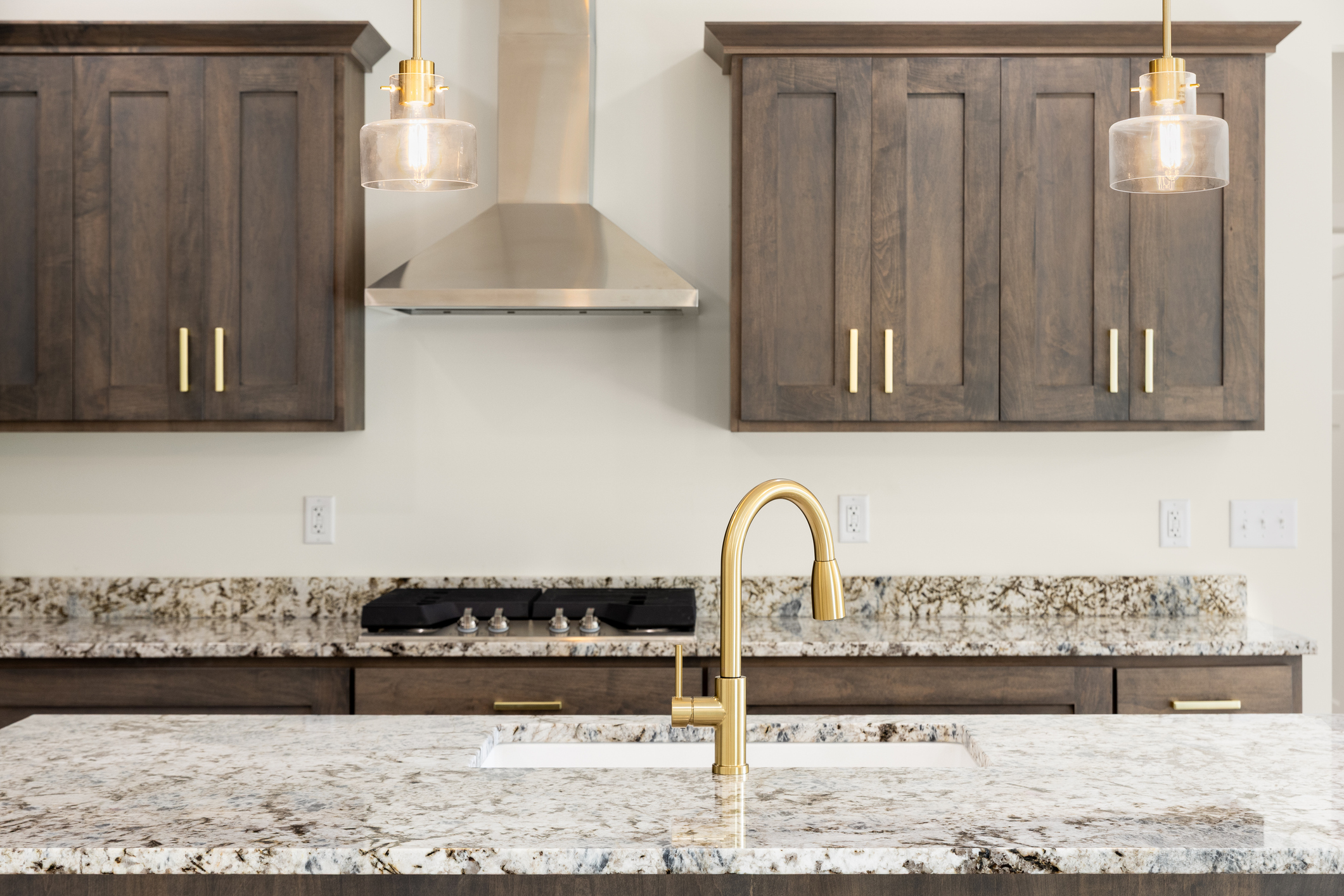
Today’s granite can resemble marble, quartzite, or abstract natural artwork, depending on the slab. Homeowners can find soft movement, dramatic contrast, swirling mineral patterns, and larger-format pieces that feel cleaner and more intentional. Book matching may also be available for certain slabs, creating mirrored movement across a large island or wall feature.
Finishes have evolved as well. Polished granite remains popular for its smooth, reflective surface, but honed and leathered finishes offer a softer, more textured look. Edge profiles have also become more varied. An eased edge can feel simple and modern, an ogee edge can support a traditional kitchen, and a mitered waterfall edge can make granite feel architectural and contemporary.
This is where granite’s staying power becomes clear. It has not stayed frozen in the past. It has evolved with design trends while keeping the qualities that made homeowners choose it in the first place.
A trustworthy countertop conversation should not dismiss quartz. Manufactured quartz countertops are often chosen for their consistency, lower maintenance, and affordability. Quartz can be a strong choice for homeowners who want a controlled pattern, a predictable color palette, and a surface that does not require sealing. Many comparisons note quartz’s consistency and lower maintenance needs, while natural stone offers more variation and heat resistance depending on the material.
Granite offers something different. Because it is natural stone, every slab has its own variation. No two pieces are exactly alike. Granite is also known for durability and heat resistance, though it still benefits from basic care, proper cleaning, and periodic sealing.
For homeowners comparing granite vs quartz countertops, the decision often comes down to priorities. Quartz may be the right fit for a clean, consistent, low-maintenance look. Granite may be the better choice for someone who wants natural variation, long-term character, and a material with a strong connection to classic kitchen design.
Granite countertops, fabricated from slabs of natural stone cut from deep within the earth, are a timeless testament to natural beauty, enduring strength through a little extra care, and long-term value.
That natural origin matters. Granite is not designed to imitate nature. It is nature. Its veining, mineral deposits, color shifts, and movement come from geological processes, not printed patterns. That gives granite a depth that can feel especially appropriate in Pittsburgh homes with architectural history and established character.
Granite also works across styles. In a traditional Colonial kitchen, it can support warm wood tones, classic cabinetry, and detailed millwork. In a modern remodel, it can become a clean-lined statement surface with dramatic movement and simple edges. In a transitional kitchen, it can bridge old and new without feeling forced.
That flexibility is why granite continues to be a staple in Pittsburgh homes. It is historically rooted, architecturally appropriate, and more varied than many homeowners remember.
The same Pittsburgh homes that first embraced granite are still standing. Many are still being improved by homeowners who care about quality, character, and long-term livability.
Granite has adapted with those homes. It has moved beyond the speckled styles many people associate with the 1990s and into a broader range of modern, refined options. For homeowners updating classic Pittsburgh homes, granite is not a step backward. It is a continuation of a design legacy, now shaped by modern craftsmanship, better slab selection, and more thoughtful fabrication.
If you’re planning a kitchen remodel in Pittsburgh, the right countertop choice can shape the entire space. Whether you’re updating a Colonial in Mt. Lebanon, refreshing a 1980s contemporary in Upper St. Clair, or modernizing a long-time family home in Sewickley or Fox Chapel, granite remains a practical and lasting option worth considering.
The key is choosing the right slab, finish, and edge profile for your home and your lifestyle.
Working with a local, experienced countertop fabricator and installer, like Lexmar USA, ensures you can see full slabs, compare granite vs quartz countertops in person, and design a surface that fits both your space and your long-term plans.
If you’re ready to explore granite countertops in Pittsburgh or want help deciding between natural stone and quartz, start by scheduling a consultation with Lexmar USA. Seeing the materials up close makes all the difference in finding the right fit for your home.

Lexmar USA refers its customers to the following quality lender for their financing.
Click here for more details and enter Promo Code: 0038-3729